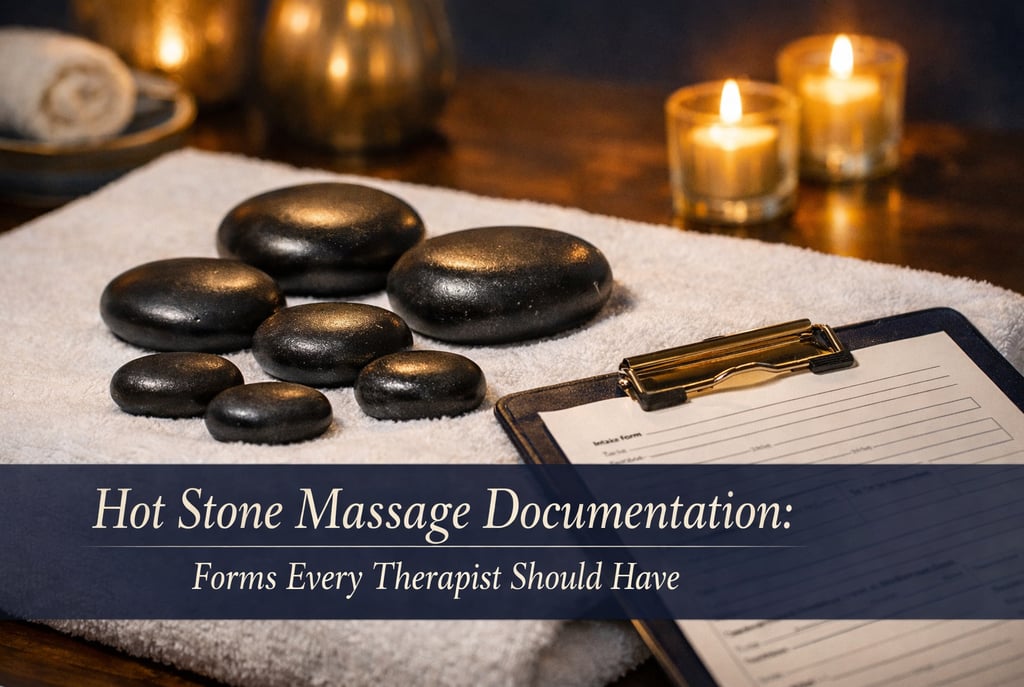
Hot Stone Massage Documentation: Forms Every Therapist Should Have
Hot Stone Massage Documentation: Offering hot stone massage? Here's what your consent form needs to cover — and why getting it right protects your practice and your clients.
MASSAGE THERAPY
4/12/20265 min read
Hot stone massage is one of the most requested specialty services in any massage practice. Clients love the deep warmth, the muscle release, the ritual of it. But underneath that experience is a set of documentation needs that's genuinely different from a standard Swedish session — and most hot stone massage consent forms out there don't come close to covering it.
When we built FormSolutionsPro, this was exactly the kind of gap we kept running into: generic consent forms being stretched to fit modality-specific services they were never designed for. Hot stone is a perfect example. The risks are real, the contraindications are specific, and the documentation has to reflect that.
In this post, we're breaking down what proper hot stone massage documentation looks like — what forms you need, what they should cover, and how to integrate them smoothly into your client workflow.
Why Generic Consent Forms Fall Short for Hot Stone
A general massage consent form gets you part of the way there. But "part of the way there" is exactly the problem when you're applying heated basalt stones to a client's body.
Hot stone massage introduces a set of variables that a standard form simply wasn't designed to address: heat sensitivity, skin integrity issues, circulatory conditions, temperature tolerance, and the risk of burns — even from stones that feel perfectly calibrated to you as the practitioner.
Here's what typically goes wrong:
Therapists use their general intake form and assume it's sufficient
DIY forms pulled from a quick internet search cover consent but miss modality-specific contraindications
Clients with conditions like diabetes, neuropathy, or broken capillaries aren't flagged before the session begins
There's no documented record that the client was informed of heat-specific risks
None of these are hypothetical. They're the kinds of documentation gaps that come back to matter — when a client has a reaction, when a complaint is filed, or simply when you're trying to maintain the level of professionalism your practice deserves.
This isn't about living in fear of worst-case scenarios. It's about running a practice that's built to last.
What a Hot Stone Massage Consent Form Should Actually Cover
Good hot stone documentation doesn't just say "I agree to receive massage." It captures the information you need to deliver a safe, informed session — and creates a record that you did exactly that.
Here's what a well-built hot stone consent form should include:
1. Modality-Specific Health History Questions
Before stones ever touch skin, you need to know about conditions that directly affect heat tolerance and safety.
Your form should screen for:
Diabetes or neuropathy — reduced sensation means clients can't reliably report if stones are too hot
Cardiovascular conditions — heat affects circulation; certain heart conditions and hypertension warrant modification or contraindication
Skin integrity issues — sunburn, open wounds, rashes, or recent procedures are automatic no-go zones
Pregnancy — particularly relevant for abdominal or lower back placement
Varicose veins or broken capillaries — direct stone contact in these areas isn't appropriate
Current medications — blood thinners, vasodilators, and certain anti-inflammatory medications all interact with heat therapy
A general health history form captures some of this. But a hot stone-specific intake digs into the details that actually matter for this modality.
2. Informed Consent Language Specific to Heat Application
Your client needs to understand — and confirm in writing — that hot stone massage carries risks that standard massage does not.
This section should explain:
The nature of heated stone application and typical temperature ranges
The risk of burns if communication isn't maintained during the session
The importance of telling you immediately if anything feels too warm
That sensation may vary in different body areas
This isn't meant to scare clients — it's meant to open a communication channel before the session starts. Clients who understand what to expect are better partners in their own care.
3. A Clear Contraindication Acknowledgment
A well-designed form presents the contraindication list and asks the client to confirm they've reviewed it and disclosed any relevant conditions. This documentation matters.
It also tells your client, without a lecture, that you take their safety seriously. That alone builds trust.
4. Session-Specific Preferences and Notes
Stone placement, temperature sensitivity, pressure preferences — capturing this information creates a better experience and gives you notes to reference at return visits.
5. Signature Block with Date
Simple, but essential. The form only does its job if it's signed and dated before the session begins.
Not sure which forms your practice actually needs? Download our free checklist — 31 Essential Forms Your Massage Practice Needs in 2026 — and find out exactly where your documentation gaps are. Get the Free Checklist →
How to Work This Into Your Client Workflow
Documentation only protects you if it's actually part of your process — not an afterthought you hand a client in the hallway before a session.
Here's a simple workflow that works for most practices:
For new clients booking hot stone: Send the intake and consent form digitally before their appointment, or have it ready at the front of their arrival. Build in 5 minutes for them to complete it without feeling rushed.
For returning clients adding hot stone to their services: Don't assume the general intake you have on file is enough. Hot stone requires its own consent conversation and documentation — even with long-term clients.
Before every session: Do a quick verbal check-in. "Any changes to your health since we last met?" is a two-second habit that catches what forms sometimes miss.
After the session: If anything notable happened — a client reported warmth sensitivity, you modified placement — make a brief note. Your session notes don't need to be long. They need to exist.
A common concern: "Will clients find this level of paperwork off-putting?" In our experience, the opposite is true. Clients who see a therapist take documentation seriously feel more confident in their care — not less.
Advanced Tips: What Separates Professional Hot Stone Practices
A few things we see consistently in well-run practices that newer therapists often skip:
Don't conflate your general consent with your hot stone consent. These are two different documents serving two different purposes. Using one form for everything dilutes both.
Review your form annually. Your practice evolves. Your client population may shift. A form that worked well when you were doing mostly relaxation massage may need updating as you add specialty services.
Keep your completed forms. This sounds obvious, but the number of practitioners who collect forms and don't have a consistent filing or retention system is higher than you'd think. Digital scan or physical file — pick a system and stick to it.
Train any staff or contractors to the same standard. If someone is working in your space and doing hot stone sessions, they need to be using the same intake and consent process you do. Consistency is the point.
If you'd rather skip the blank page entirely, our Hot Stone Massage Consent Form is available in the FormSolutionsPro store — professionally designed, print-ready, and built specifically for the documentation needs of hot stone practitioners.
Your Documentation Is Part of Your Client Experience
Hot stone massage is a specialty service. It deserves specialty documentation — forms that reflect the actual risks, the actual contraindications, and the actual level of care you're bringing to every session.
Getting this right isn't just about protecting yourself legally. It's about running a practice that operates with the kind of consistency and professionalism that keeps clients coming back — and keeps you confident in your work.
Start with the right form. Use it every time. Build the habit now, and it becomes effortless.
Your clients trust you with their health. Your paperwork should reflect that.
Know Exactly Which Forms Your Practice Needs
Download our free 31 Essential Forms Checklist and get your practice compliance score. No fluff — just a clear picture of where you stand and what to do about it. Download Free Checklist →
[DISCLAIMER] The information in this article is provided for educational and informational purposes only. FormSolutionsPro.com is not a law firm and does not provide legal or medical advice. Form templates are professional business tools — practitioners are responsible for ensuring their documentation practices comply with applicable laws and professional standards in their jurisdiction.
© 2025. Form Solutions Pro - All rights reserved.