Prenatal Massage Forms: A Professional Standards Guide for Therapists
A professional guide explaining what a prenatal massage intake form must include — from pregnancy health history to positioning consent — and how to work it into a seamless client workflow.
MASSAGE THERAPY
4/11/20265 min read
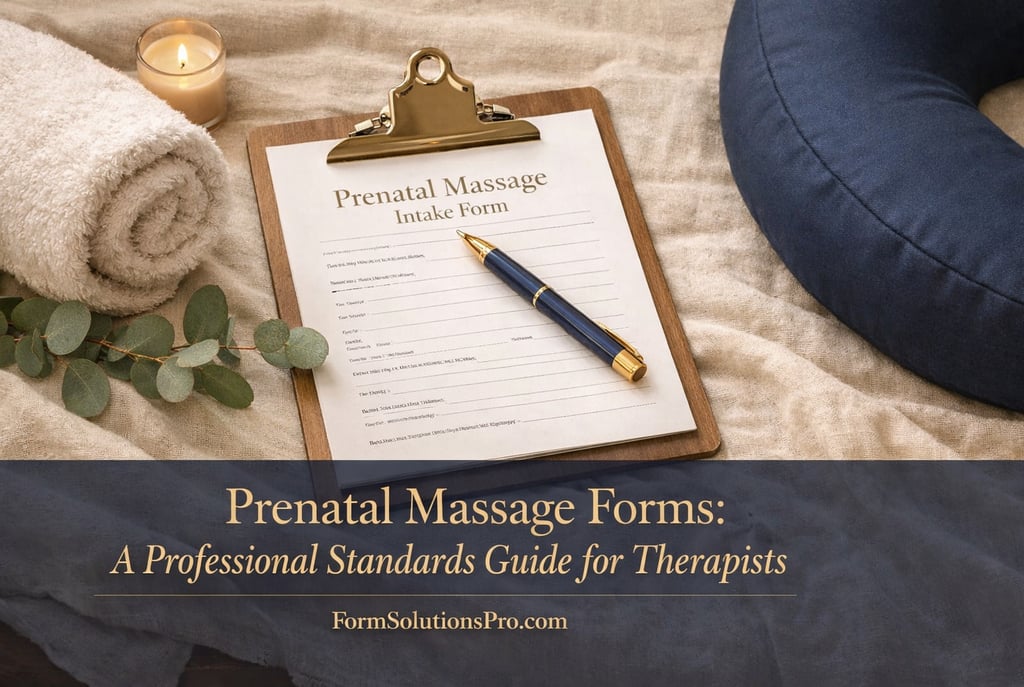
Prenatal massage is one of the most rewarding services a therapist can offer — and one of the most documentation-sensitive. When a pregnant client walks through your door, the stakes are higher, the health variables are more complex, and the need for a thorough prenatal massage intake form is non-negotiable.
Yet when we started building FormSolutionsPro, we kept finding the same problem: most prenatal consent forms were either pulled from general massage templates with a line or two added about pregnancy, or so dense with clinical jargon that clients tuned out before finishing them. Neither extreme serves your practice.
This guide breaks down exactly what your prenatal documentation should include, when to use it, and how to make the intake process feel professional — not intimidating — for your expecting clients.
Why Prenatal Documentation Is Different
Prenatal massage isn't just regular massage with a bolster swap. The physiological changes of pregnancy — shifting center of gravity, increased blood volume, vascular changes, ligament laxity — mean the intake information you need is genuinely different from a standard session.
Without the right form, you're working blind. You don't know:
What trimester they're in and how far along
Whether they have a high-risk pregnancy or OB restrictions
If they've experienced spotting, preeclampsia, or placenta previa
What positions they can and cannot tolerate
Whether they've had prenatal massage before
A generic intake form won't surface any of this. And if something goes wrong — or if a client has a concern mid-session — having documented those health variables is what protects both of you.
The Real Risk of Skipping Proper Intake
Here's what practitioners often don't consider: a client may not know what information is relevant to share unless you ask for it.
Prenatal clients aren't trying to hide medical details. They just don't always connect the dots between their OB care and their massage appointment. That's your job — to ask the right questions through a structured intake form before the session starts.
Without a prenatal-specific intake form, you might:
Miss contraindications that your general form doesn't address
Fail to document that a client disclosed a high-risk condition
Have no record if a client later claims they weren't screened
Look underprepared in a client's eyes — which erodes trust before you've even started
This isn't about being overly cautious. It's about running the kind of professional practice that clients recommend to their pregnant friends.
What a Strong Prenatal Massage Intake Form Must Include
Section 1: Pregnancy Basics
This is your foundation. You need:
Due date and gestational week — not just "I'm in my second trimester"
Singleton or multiple pregnancy — twins and higher-order multiples carry different risk profiles
OB or midwife contact information — particularly useful if the client has disclosed complications
Previous massage history — has this client had prenatal massage before? How did they respond?
Section 2: Pregnancy Health Status
This is where generic forms fall short. A prenatal-specific form should ask directly about:
Preeclampsia or high blood pressure
Gestational diabetes
Placenta previa or low-lying placenta
History of preterm labor or premature rupture of membranes
Blood clots or DVT history
Severe swelling in the hands, face, or feet
Spotting or unusual discharge
These aren't scare tactics — they're the clinical details that help you modify the session appropriately or know when to refer out.
Section 3: Current Symptoms & Comfort Concerns
Pregnancy is physically unpredictable. This section captures:
Current areas of discomfort (back, hips, legs, ribs)
Nausea or sensitivity concerns
Positioning preferences and limitations
Heartburn or reflux triggers that affect positioning
Swelling areas to avoid or address
Section 4: Positioning & Pressure Preferences
Prenatal sessions typically use side-lying positioning after the first trimester, but not always the same way for every client. Document:
Which side they prefer
Comfort with face-down positioning in early pregnancy (with appropriate equipment)
Pressure preferences, particularly around the lower back and legs
Any areas that are off-limits per OB recommendation
Section 5: Informed Consent Language
Your prenatal form should include clear, readable consent language that covers:
The nature of prenatal massage and how it differs from standard massage
Acknowledgment of disclosed health conditions
Client confirmation that they've informed their OB they're receiving massage
Signature and date
Pro tip: Don't bury the consent language at the bottom of a long form. A client who's been answering questions for 20 minutes may rush through the final section. Put the key acknowledgment where it's visible and make sure the signature line is clearly labeled.
How to Work Prenatal Intake Into Your Client Workflow
The best time to send or present a prenatal intake form is before the appointment — not when your client is already in the door, trying to wrangle a pregnancy pillow while signing paperwork.
Here's a simple workflow:
At booking — mention that you use a prenatal-specific intake form and that you'll send it in advance
24–48 hours before the appointment — email or text the form with a brief note about why you use it ("so I can prepare a session that's comfortable and safe for where you are in your pregnancy")
At the session start — do a brief verbal review of anything flagged on the form before you begin
This approach does two things: it gives you the information you need before the client arrives, and it signals to the client that you take prenatal care seriously. That's a referral-generator.
What about clients who feel like it's too much paperwork?
Frame it as personalization, not procedure. "Because you're pregnant, I use a more detailed intake so I can tailor everything to exactly where you are right now" lands very differently than "I need you to fill out this form."
Most prenatal clients appreciate the thoroughness. They're navigating a lot of medical appointments — a therapist who asks smart questions stands out.
Advanced Tips for Prenatal Documentation
Don't use a general consent form with "pregnancy" added. Clients notice. A form that's clearly designed for prenatal sessions tells them this is something you specialize in — even if it's just one offering among many.
Update the form at return visits. A client in week 14 has a very different health picture than the same client at week 32. Build in a quick review at each visit rather than relying on the original intake form indefinitely.
Document any session modifications in your SOAP or session notes. If you modified pressure, avoided certain areas, or adjusted positioning based on what the client disclosed, note that. It's part of a complete clinical record.
Ask about OB clearance — but don't require a note. Most healthy pregnancies don't need explicit OB clearance for massage. But asking whether the client has mentioned massage to their provider is reasonable and worth documenting either way.
Watch for red flags mid-session. Your intake form is step one. If a client reports sudden swelling, unusual pain, or dizziness during the session, stop and follow appropriate protocols — and document it.
If you'd rather skip the blank page entirely, our Prenatal Massage Consent Form is available in the FormSolutionsPro store — professionally designed, print-ready, and built specifically for the prenatal documentation needs therapists actually encounter.
Your Documentation Reflects Your Standard of Care
Prenatal clients are trusting you at a vulnerable, important time in their lives. The right intake form isn't a bureaucratic hurdle — it's the first demonstration of how carefully you'll treat them.
It tells your client: I thought about your specific situation before you even arrived.
Take the time to build a proper prenatal intake process. Use a form that asks the right questions, review it with intention, and document what matters. That's what separates a good session from a practice that clients trust — and come back to, through every trimester and beyond.
The information in this article is provided for educational and informational purposes only. FormSolutionsPro.com is not a law firm and does not provide legal or medical advice. Form templates are professional business tools — practitioners are responsible for ensuring their documentation practices comply with applicable laws and professional standards in their jurisdiction.
© 2025. Form Solutions Pro - All rights reserved.