The Complete Documentation System Every Mobile Massage Therapist Needs
Protect your practice and serve clients better with a complete documentation system built for mobile work. Learn which forms you need, how to organize them on the go, and implement a professional system in just four weeks.
MASSAGE THERAPY
1/9/20268 min read
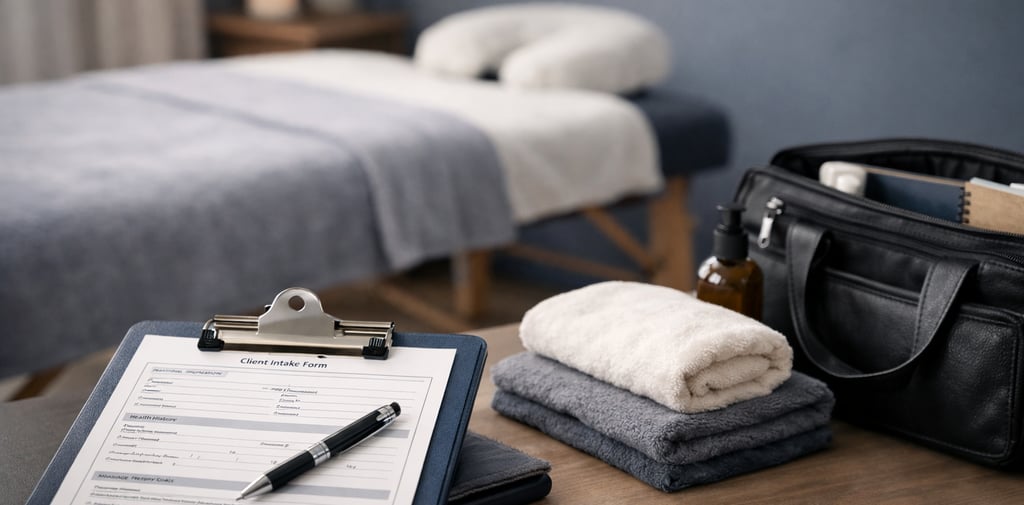
Running a mobile massage practice means you're already juggling a lot—driving between clients, setting up and breaking down your table, managing appointments, and delivering exceptional therapeutic work. The last thing you need is disorganized paperwork causing you stress or, worse, legal headaches.
Yet proper documentation isn't just about covering yourself legally. It's about building trust with clients, delivering better care through detailed records, and running your business like the professional you are. Whether you're just starting out or you've been mobile for years, having a complete documentation system makes everything smoother.
Let's break down exactly what you need, why it matters, and how to implement a system that actually works for your on-the-go practice.
Why Mobile Therapists Need Better Documentation Systems
Mobile massage therapists face unique documentation challenges that spa-based therapists don't deal with. You can't just pull a file from a cabinet or click into your office computer system when you're working in someone's home or at a corporate event.
Here's what makes mobile documentation tricky:
You're working in varied environments. Client homes, offices, events—each location presents different challenges for handling paperwork professionally. You need forms that work whether you're standing in someone's living room or sitting in your car between appointments.
Storage and organization become complicated. Where do completed forms go? How do you keep them secure and accessible when you're always on the move? A solid system prevents the dreaded "I know I have that form somewhere" moment.
First impressions matter more. When you arrive at a client's location, you're representing your entire business. Professional, organized paperwork signals that you run a legitimate, trustworthy practice.
Legal protection is critical. Without the safety net of working under an established spa or clinic, your documentation is your primary defense if questions about consent or treatment protocols ever arise.
The Essential Forms Every Mobile Practice Needs
Let's start with your foundation—the forms every mobile massage therapist should have ready to go.
Client Intake and Health History
This is where everything begins. Your intake form collects vital information about new clients: contact details, health conditions, medications, previous injuries, and current concerns. For mobile therapists, this form needs to be comprehensive yet efficient—something clients can complete quickly while you're setting up.
Key sections should include medical history, current pain or tension areas, previous massage experience, and pressure preferences. Don't forget to ask about allergies, especially to oils or lotions you might use.
Informed Consent
Informed consent isn't just a formality—it's a conversation documented on paper. This form explains what massage therapy is, what clients can expect, potential risks, and their rights during treatment. It confirms they understand and agree to receive services.
For mobile work, your consent form should address location-specific considerations. Clients need to confirm they've provided a safe, appropriate space for treatment and understand their responsibility in creating that environment.
SOAP Notes or Session Documentation
After each session, you need to document what happened. SOAP notes (Subjective, Objective, Assessment, Plan) provide a standardized format that works well for massage therapy:
Subjective: What the client reports—pain levels, areas of concern, how they've felt since the last session.
Objective: What you observe and measure—range of motion, muscle tension, postural observations.
Assessment: Your professional evaluation of the session and the client's condition.
Plan: Treatment approach used, recommendations for next session, homework for the client.
Mobile therapists often complete these in their vehicle after appointments. Having a clear template makes this quick and consistent.
Cancellation and Payment Policies
Mobile work involves significant time investment beyond the actual massage—driving, setup, breakdown. Your policies need to reflect this reality. A clear policy form outlines cancellation windows, no-show fees, payment methods accepted, and what happens if a client creates an unsafe work environment.
Having clients sign this upfront prevents awkward conversations later when you need to enforce a boundary.
Specialized Forms for Different Mobile Situations
Beyond the basics, different types of mobile work require specialized documentation.
Prenatal Massage
Working with pregnant clients requires additional screening and specific consent. Your prenatal forms should document trimester, pregnancy complications, physician clearance (when appropriate), and positioning preferences. This specialty demands extra liability protection through careful documentation.
Corporate and Event Massage
Chair massage at offices and events needs streamlined paperwork. Quick intake forms that capture essential health screening without overwhelming participants work best. You also need liability waivers that protect both you and the organization hosting you.
Specialized Modalities
If you offer specific techniques—cupping, hot stone, deep tissue, sports massage—separate consent forms for each modality demonstrate thoroughness. These forms explain the specific technique, benefits, contraindications, and potential side effects like temporary bruising from cupping or soreness after deep work.
Clients appreciate understanding exactly what they're consenting to, and you're protected if someone later claims they didn't know what to expect.
Building Your Digital Documentation Workflow
Paper forms are fine, but smart mobile therapists use digital systems that blend efficiency with security.
The Hybrid Approach That Works
Many successful mobile therapists use this workflow: Print forms and carry them in a professional portfolio or clipboard. Have clients complete them while you set up. Use your phone to photograph or scan completed forms immediately after the appointment. Store digital copies in a secure, HIPAA-compliant system (like encrypted cloud storage). File paper copies in a locked filing system at your home office.
This hybrid approach gives you immediate access to client information while maintaining secure backups and satisfying record-keeping requirements.
Organization Systems That Travel Well
Your mobile office needs to be as organized as a traditional office, just more compact. Consider using a professional portfolio with sections for blank forms, completed forms awaiting filing, and current client files for today's appointments. Color-coded folders can help you quickly identify different form types. A small, portable file box in your vehicle serves as temporary storage for completed paperwork between appointments and your weekly filing session.
The key is having a system reliable enough that you can find any form you need within 30 seconds, even while standing in a client's entryway.
Legal and Compliance Considerations for Mobile Therapists
Documentation isn't just about good business practices—it's about protecting your license and your livelihood.
Record Retention Requirements
Most states require massage therapists to maintain client records for a minimum period, typically 3-7 years. Check your state's specific requirements. For mobile therapists, this means securely storing records even for clients you no longer see.
Privacy and Confidentiality
When you're carrying client information in your vehicle or completing paperwork in semi-public spaces, extra privacy measures matter. Never leave client forms visible on your dashboard or car seats. Don't complete session notes in coffee shops where others can see client names or information. Use client initials rather than full names when making quick reference notes in less secure environments.
Scope of Practice Documentation
Your forms should clearly communicate what massage therapy is and isn't. Include language that explains you don't diagnose conditions, prescribe treatments, or replace medical care. This protects you if a client misunderstands the therapeutic scope of your work.
Implementing Your Documentation System: A Step-by-Step Plan
Ready to upgrade your documentation? Here's how to do it without overwhelming yourself.
Week 1: Audit and Acquire
Review the forms you currently use. What's missing? What could be clearer? Make a list of all forms you need for your specific practice. Professional, ready-to-use forms save you hours of creation time and ensure you're using industry-standard language and legal protections.
Week 2: Set Up Your Systems
Create your physical organization system—the portfolio or file box that travels with you. Set up your digital storage and backup system. Establish your workflow: when forms get completed, how they get scanned, where they're stored, when paper copies get filed.
Week 3: Update Current Clients
Send a brief email to existing clients explaining that you're updating your forms to better serve them. At their next appointment, have them complete the new paperwork. Frame this as a positive improvement: "I'm upgrading my documentation to provide even better continuity of care."
Week 4: Refine and Adjust
After using your new system for a few appointments, identify what's working and what needs tweaking. Maybe you need a different bag for transporting forms. Perhaps you need to print forms on colored paper to differentiate them more easily. Small adjustments now prevent ongoing frustration.
Common Documentation Mistakes to Avoid
Learn from others' mistakes rather than making them yourself.
Using outdated forms. That intake form you've been using for five years? It probably needs updating. Legislation changes, best practices evolve, and your business grows. Review your forms annually.
Incomplete session notes. "Lower back pain" isn't enough documentation. Include specific details: which muscles you worked, what techniques you used, how the client responded, what you recommended. Future-you will be grateful for thorough notes.
Forgetting to date and sign. Every form you complete should have a date and your signature. Undated records lose credibility and legal weight.
Not getting new consent for new modalities. If a regular client asks to try cupping for the first time, have them sign a cupping-specific consent form. Adding services requires new documentation.
Letting paperwork pile up. That stack of completed forms sitting in your car for weeks? It's a security risk and a disorganization disaster waiting to happen. Process paperwork within 24 hours of appointments.
The Business Benefits of Great Documentation
Beyond legal protection, solid documentation systems actually help you deliver better massage therapy and run a more successful business.
Better continuity of care: Detailed notes mean you remember exactly what you worked on last time, even if it's been weeks or months between appointments. Clients notice when you pick up right where you left off.
Professional credibility: When you arrive organized with professional paperwork, clients take you more seriously. This leads to better retention, more referrals, and the ability to charge appropriately for your expertise.
Business insights: Your documentation becomes data. You can track which modalities clients prefer, which techniques get the best results, seasonal patterns in complaints, and where your practice is growing.
Reduced stress: Nothing creates anxiety like wondering whether you're legally protected or whether you can remember important details about a client. Comprehensive documentation means you can stop worrying and focus on the work you love.
Your Documentation System Checklist
Here's a quick checklist to verify your system is complete:
✓ Client intake and health history forms for new clients
✓ General informed consent for massage therapy
✓ Specialty consent forms for each modality you offer
✓ SOAP notes or session documentation templates
✓ Clear policies on cancellations, payments, and boundaries
✓ Physical organization system that travels with you
✓ Digital backup and storage system
✓ Regular workflow for processing completed paperwork
✓ Annual review process for updating forms
✓ Secure storage for required retention periods
Moving Forward With Confidence
Creating a complete documentation system might feel like a lot of work upfront, but it's one of those investments that pays dividends every single day. You'll spend less time searching for information, feel more confident in client interactions, and sleep better knowing you're protected legally and professionally.
The mobile massage therapists who build thriving, sustainable practices don't just give great massages—they run professional businesses with systems that support their success. Your documentation system is one of those foundational systems that makes everything else easier.
Start with the basics, implement your systems one step at a time, and adjust based on what works for your specific practice. Before you know it, organized documentation will become second nature, freeing up mental space for what really matters: helping your clients feel better.
Whether you're launching your mobile practice or upgrading an established business, having the right forms ready to go eliminates one more barrier between you and success. Professional forms designed specifically for massage therapists mean you can focus on building your practice rather than building documentation from scratch.
Your future self—and your clients—will thank you for getting your documentation right.
© 2025. Form Solutions Pro - All rights reserved.