Why Every Massage Practice Needs a Professionally Structured Consent Form
A practical guide for massage therapists explaining what a professionally structured consent form must include, why generic templates fall short, and how proper documentation protects your practice while building client trust from the very first appointment.
MASSAGE THERAPYPRACTICE MANAGEMENT
2/19/20265 min read
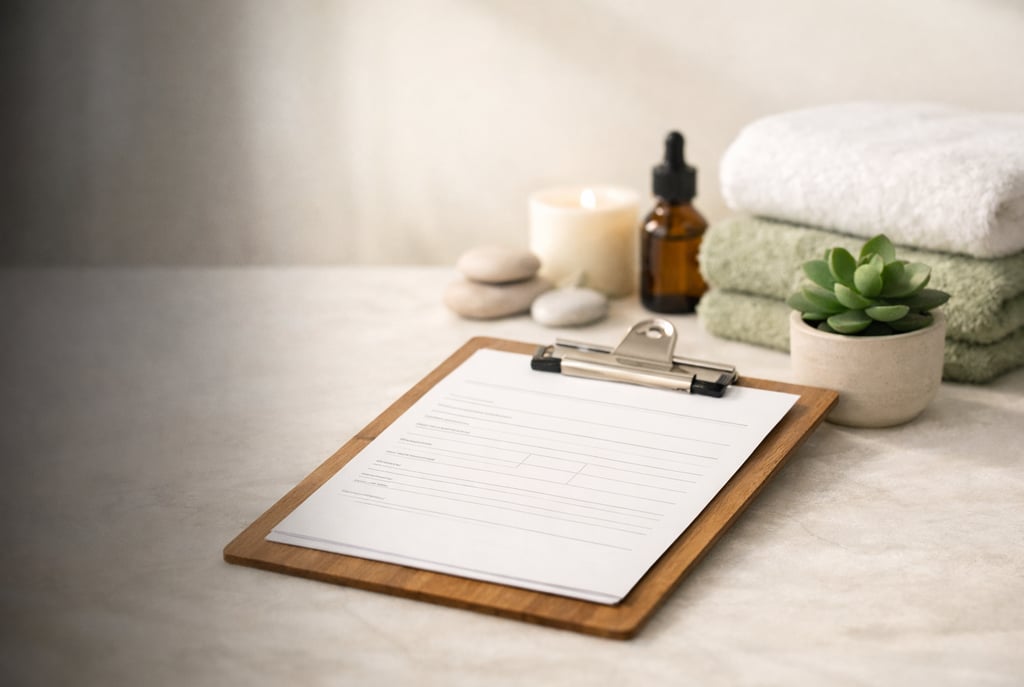
You've invested in your training, your table, your oils, and your space. But when a new client walks through the door, the first thing they interact with isn't your technique — it's your paperwork.
That moment matters more than most practitioners realize.
When we set out to build FormSolutionsPro, we noticed something: most consent forms floating around online were built for everyone, which meant they worked well for no one in particular. Generic. Incomplete. Sometimes just plain wrong for the work being done. Understanding why every massage practice needs a professionally structured consent form is one of the most practical things you can do to protect your clients — and yourself.
In this post, we'll break down exactly what a well-built consent form should include, how to use it in your client workflow, and what separates a professional document from a downloaded-off-the-internet placeholder.
The Problem With "Good Enough" Consent Forms
Here's a scenario that plays out more often than it should: a client comes in with an undisclosed health condition. The session happens. Afterward, something doesn't feel right — for them, or for you. You reach for your intake paperwork, and it's either missing the right questions or so vague it tells you nothing useful.
That's not a hypothetical. That's Tuesday.
Without a properly structured consent form, you're exposed in ways that aren't obvious until something goes wrong. And by then, it's too late to backtrack.
The most common mistakes practitioners make:
Using a generic template that wasn't designed for massage therapy specifically — missing contraindication questions, pressure preferences, or draping acknowledgments
DIY forms cobbled together from multiple sources, with inconsistent language and gaps in coverage
Skipping the consent form altogether for returning clients, assuming history on file is enough
One-size-fits-all language that doesn't reflect the specific modality being performed
Here's the thing: a consent form isn't just a legal formality. It's a communication tool. When it's done well, it tells your client that you're thorough, that you take their health seriously, and that they're in capable hands. When it's done poorly — or not at all — it sends the opposite message.
What a Professionally Structured Consent Form Actually Looks Like
Why Every Massage Practice Needs a Professionally Structured Consent Form — Starting With the Right Sections
A strong general massage consent form isn't one page of vague language followed by a signature line. It has distinct, purposeful sections that work together to give you a complete picture of the client in front of you.
Here's what needs to be in it — and why each part pulls its weight.
1. Client Contact & Demographic Information
This seems obvious, but it's often incomplete. You need more than a name and phone number. Include emergency contact information, date of birth, and how they heard about your practice. This data matters if something goes wrong during a session and you need to reach someone quickly.
2. Health History & Medical Background
This is the section most generic forms get wrong. You need specific questions about:
Cardiovascular conditions (high blood pressure, heart conditions, recent surgeries)
Skin conditions, injuries, or areas of concern
Current medications — especially blood thinners, which affect how tissue responds to pressure
Pregnancy status
Recent injuries, surgeries, or medical procedures
Pro tip: Ask about medications by name category, not just "are you taking anything." Clients often don't connect their blood pressure medication to their massage appointment.
3. Pressure & Treatment Preferences
This protects you and improves the session. Ask about preferred pressure level, areas to avoid, and any previous massage experiences — good or bad. A client who had a painful deep tissue session elsewhere may not volunteer that unless you ask.
4. Informed Consent Language
This is where you clearly explain what the session involves, that massage is not a substitute for medical treatment, and that the client has the right to stop or modify the session at any time. It should be written in plain language — not legalese — that a client can actually read and understand before signing.
5. Draping & Modesty Acknowledgment
Clear, simple language confirming that draping protocols are in place and that the client understands their rights during the session. This protects both parties and sets professional expectations from the start.
6. Signature & Date
Dated and signed — every time. Not just on the first visit.
Not sure which forms your practice actually needs? Download our free checklist — 31 Essential Forms Your Massage Practice Needs in 2026 — and find out exactly where your documentation gaps are.
How to Put This Into Practice
The best consent form in the world doesn't help you if it's sitting in a folder somewhere. Here's how to actually use it.
Send it before the appointment. Email your consent form as part of your booking confirmation. Clients fill it out at home, without feeling rushed in your waiting area. You get to review it before they arrive.
Review it before every session — not just the first one. Health changes. Medications change. A client who was fine six months ago may have had surgery last month. A quick "has anything changed since your last visit?" paired with a current form on file keeps you current.
Store it consistently. Whether you use paper files or digital storage, have a system. If something ever comes up, you need to be able to put your hands on that document quickly.
Will clients find this intrusive? Rarely, and almost never when you frame it correctly. Most clients appreciate thoroughness. A simple "I ask all my clients these questions so I can give you the best session possible" is usually all it takes.
Advanced Tips: What Seasoned Practitioners Do Differently
New practitioners often focus on getting a form. Experienced practitioners focus on getting the right form updated regularly.
Avoid these common oversights:
Forgetting to re-collect consent after a long gap between visits (6+ months)
Using the same form for every modality — a general massage form isn't sufficient for hot stone, prenatal, or oncology sessions
Leaving the consent language so broad it provides no actual protection or clarity
What established practitioners do well:
They review their forms annually and update language as their services evolve
They use modality-specific consent forms when adding new services, rather than trying to squeeze everything into one document
They treat the intake process as part of the client experience — not a bureaucratic hurdle
The right form doesn't just protect you legally — it tells your client you take their care seriously before the session even begins.
If you'd rather skip the blank page entirely, our General Massage Consent Form is available in the FormSolutionsPro store — professionally designed, print-ready, and built specifically for massage therapy practices of all sizes.
Your Paperwork Reflects Your Professionalism
This isn't the most exciting part of running your practice. But it's one of the most important.
A well-structured consent form does three things at once: it protects your practice, it improves your client intake process, and it communicates professionalism before you've said a single word. Your clients trust you with their health and their bodies. Your documentation should reflect that level of care.
Start with your consent form. Review what you have. Fill the gaps. And if you're building from scratch, make sure you're starting with something built for your work — not a generic placeholder that was designed for nobody in particular.
Know Exactly Which Forms Your Practice Needs
Download our free 31 Essential Forms Your Massage Practice Needs in 2026 checklist and get your practice compliance score. No fluff — just a clear picture of where you stand and what to do about it. [Download Free Checklist]
© 2025. Form Solutions Pro - All rights reserved.