
Why Every Massage Practice Needs Professionally Structured Consent Form
A practical guide to what a professional massage therapy consent form must include, why generic forms leave practices vulnerable, and how to build a stronger intake process from day one.
PRACTICE MANAGEMENTMASSAGE THERAPY
4/10/20265 min read
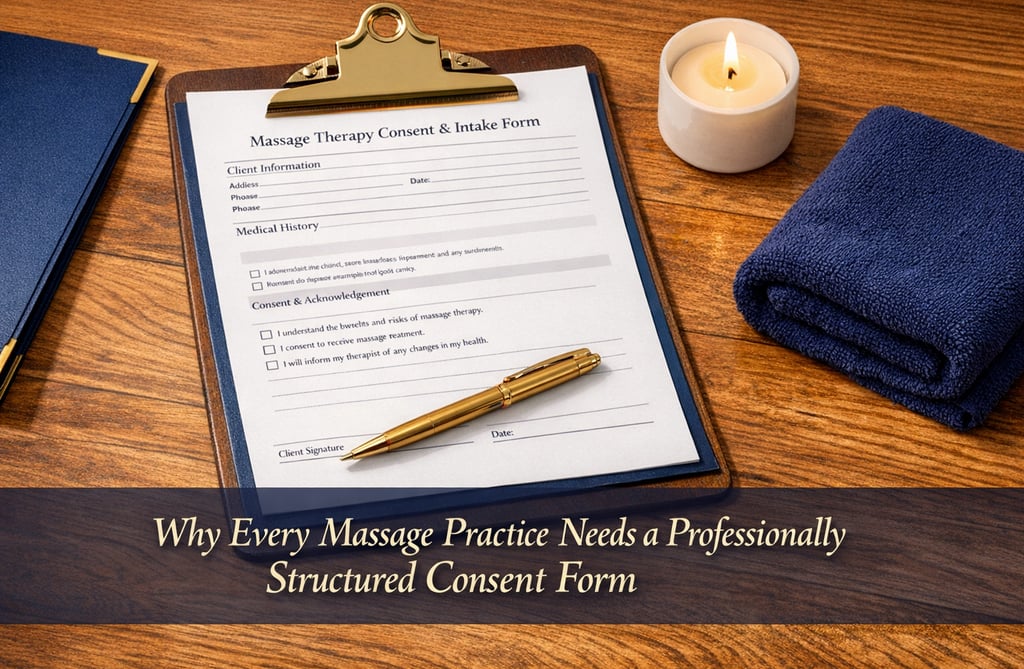
Why Every Massage Practice Needs a Professionally Structured Consent Form
You've invested years developing your skills. You know your modalities, you understand your clients' bodies, and you genuinely care about the work you do.
But here's a question worth sitting with: does your paperwork reflect that same level of care?
A massage therapy consent form is one of the first things a new client interacts with before they ever get on your table. It sets the tone for the entire relationship — and it either communicates professionalism or it doesn't. At FormSolutionsPro, we noticed early on that most consent forms floating around online were built for a generic "wellness practice," not for the specific realities of massage therapy. So we built something better.
In this post, we'll walk through why a professionally structured consent form matters, what it needs to include, and how to put one to work in your practice starting today.
The Problem With Generic Consent Forms
Most practitioners don't skip consent forms altogether — they just use whatever they could find quickly. A template downloaded from a forum. A form borrowed from a colleague. Something printed from a continuing education handout years ago.
The problem isn't that these forms exist. The problem is what they leave out.
A generic consent form might collect a signature and call it done. But it won't ask about the client who takes blood thinners and is coming in for deep tissue work. It won't document that your client with fibromyalgia specifically requested light pressure on her lower back. It won't capture the conversation you had about contraindications before the session began.
When something goes wrong — a client reaction, a complaint, a misunderstanding about what was agreed upon — your documentation is your record of what actually happened. A thin form gives you thin protection.
There's also the professionalism gap. Clients notice when your paperwork feels cobbled together. It doesn't instill confidence. And in a field built on trust, first impressions matter more than most practitioners realize.
The common mistakes we see most often: forms that are too vague, forms that skip modality-specific risks entirely, and forms that were never updated after a therapist expanded their service menu.
What a Professionally Structured Massage Therapy Consent Form Includes
A well-built consent form isn't complicated — but it is specific. Here's what it needs to cover.
Client Identification and Contact Information
This sounds basic, but it matters more than people think. Full legal name, date of birth, emergency contact, and preferred contact method. Not just a first name and a phone number.
Health Screening Section
This is where generic forms fall shortest. Your consent form should ask — in plain language — about:
Current medications (including supplements and blood thinners)
Recent surgeries or injuries
Chronic conditions relevant to massage (fibromyalgia, cancer history, diabetes, cardiovascular conditions)
Skin conditions or sensitivities
Pregnancy status
Areas of the body to avoid
This isn't about playing doctor. It's about having a documented conversation before the session begins so both you and your client are on the same page.
Scope of Services Statement
Clearly state what you do and what you don't do. This section protects you from scope misunderstandings and sets professional boundaries in writing before they ever need to be enforced verbally.
Informed Consent Language
Your client needs to acknowledge that they understand:
Massage therapy is not a substitute for medical treatment
They have disclosed all relevant health information
They can stop the session at any time
The nature of the touch involved
This doesn't have to read like a legal document. It just needs to be clear.
Signature and Date Block
Dual signature blocks — one for the client, one for the therapist — with date fields. If your current form only has one signature line, that's a gap worth closing.
Re-Consent Protocol Note
Best practice for ongoing clients: note at the bottom of the form that clients should update their health information if anything significant changes between visits. This simple addition shows a level of professional thoroughness that clients remember.
Not sure which forms your practice actually needs? Download our free checklist — 31 Essential Forms Your Massage Practice Needs in 2026 — and find out exactly where your documentation gaps are. Get the Free Checklist →
How to Put Your Consent Form to Work
The best consent form in the world doesn't help if it's sitting in a drawer or emailed as an afterthought the morning of a first appointment.
Here's the workflow that works:
Send it before the appointment. Email or text your new client intake materials 24–48 hours before their first visit. This gives them time to read carefully, think about their health history, and arrive informed — not rushed.
Review it together. Before the session, spend two minutes walking through anything that caught your attention on the form. This isn't a clinical interrogation. It's a professional conversation that builds trust.
File it immediately. Whether you keep paper files or digital records, the signed form goes into the client file the same day. No exceptions.
Will clients find this intrusive? In our experience, no — not when it's presented as standard professional practice. Most clients appreciate the thoroughness. It tells them they're in capable hands.
Quick win for today: Pull out your current consent form and compare it against the sections listed above. Identify the first gap you find and fix it before your next new client appointment.
Advanced Tips for a Stronger Consent Process
Don't use the same form for every modality. If you offer both Swedish massage and cupping therapy, those clients have very different risk profiles. A general consent form works for general massage — but specialty services deserve specialty documentation.
Update your form annually. Your practice evolves. Your forms should too. Set a reminder every January to review your consent form and make sure it still reflects what you actually offer.
Keep a copy for the client. Offering a duplicate or a brief summary handout reinforces professionalism and gives the client something to reference if they have questions later.
What seasoned practitioners do differently: They treat the consent form as the opening move in a professional relationship, not a box to check. The conversation it starts — about health history, preferences, and expectations — sets the tone for every session that follows.
If you'd rather skip the blank page entirely, our General Massage Consent Form is available in the FormSolutionsPro store — professionally designed, print-ready, and built specifically for general massage therapy practice.
Your Paperwork Should Reflect Your Professionalism
You've already done the hard work of becoming skilled at what you do. Your documentation should be worthy of that skill.
A professionally structured massage therapy consent form isn't just a formality — it's a signal. It tells your client that you take their health seriously, that you run a real practice, and that you've thought carefully about how to serve them well.
Start with your consent form. Review it, tighten it, and make sure it's working as hard for your practice as you are.
Know Exactly Which Forms Your Practice Needs. Download our free 31 Essential Forms Checklist and get your practice compliance score. No fluff — just a clear picture of where you stand and what to do about it. Download Free Checklist →
© 2025. Form Solutions Pro - All rights reserved.